Se afișează postările cu eticheta istorie. Afișați toate postările

joi, 16 ianuarie 2014

Gdansk/Danzig

Gdansk - destinatie de vacanta

Danzig - holiday destination


Atentie postare in limba romana si engleza
Warning, post in romanian and english

          In august 2012 cind m-am intors din Suedia m-am gindit sa ma opresc pentru o jumatate de zi si in Polonia, la Gdansk. Gindul l-am avut pentru ca trecerea de la civilizatia din nord la plaiurile noarte mioritice sa nu fie chiar asa de brusc. Ulterior la momentul ajungerii in oras am constat ca ideea a fost una destul de buna.
          Un pic de istorie nu strica asa ca: Gdańsk este un municipiu în partea de nord a Poloniei, reședința voievodatului Pomerania și unul dintre cele mai mari porturi ale țării. Face parte din zona urbană Gdańsk și din Trioraș. Din punct de vedere etnografic, este considerat ca o capitală a Cașubiei. Orașul se află pe lânga coastei sudice a Golfului Gdańsk, o parte a Mării Baltice, la estuarele fluviului Vistula și ale râurilor din delta ei, Motława și Leniwka și formează o conurbație cu municipiile Sopot și Gdynia și cu comunele suburbane, Prima atesteare istorica dateaza din anul 997  Municipiul este cunoscut datorită nașterii mișcari politice „Solidaritatea”, care sub conducerea unuia dintre locuitorii orașului, Lech Wałęsa, a fost una dintre cauzele căderii comunismului în Europa Centrală și de Est în 1989..
          Gata cu partea de istorie sa trecem la lucruri mai importante. Am ajuns la Gdansk in jur de ora 13.00 cind ferry-boat-ul a acostat in port. Am avut parte de o zi foarte frumoasa pina la acel moment. Cazarea am rezolvat-o relativ repede, deoarece la plecarea din Stockholm mi-am stabilit pe GPS citeva adresa de pensiuni in care as fi putut sa intoptez. La prima pensiune nu prea am avut noroc, pentru ca nu a binevoit nimeni sa fie la receptie, dar la a doua a mers la fix. Am primit apartamentul la pret de camera dubla normala.Singura problema era ca broasca de la usa mergea un pic mai greu, acesta fiind si motivul reducerii de pret.
          Dupa ce m-am instalat si am mincat ceva am luat-o la pas prin centru istoric al orasului. Pot spune ca ceea ce am vazut mi-a placut. Un orasel mic, cochet care isi pastreaza istoria la loc de mare cinste si din care comunismul nu a facut prea multe pagube. In primul rind am ramas placut impresionat de curatenia de pe strazi, chiar daca am nimerit in plina sarbatoare a orasului strazile erau lipsite de uzuazele chistoace de tigari, ambalaje de plastic si alte asemenea.
          Un alt lucru care mi-a placut a fost faptul ca polonezii au pastrat arhitectura centrului vechi si mai mult decit atit au restaurat majoritatea cladirilor aducindu-le intr-o stare aproape de cea in care erau cind au fost construite. Multumita acestui lucru orasul pare ca a calatorit prin istorie din perioada lui de glorie din timpul Ligii Hanseatice pina in prezent pentru a ne delecta cu aerul lui medieval.
          Dupa atitea lucruri care mi-au placut trebuie sa fie si unul care nu mi-a placut. Localnicii nu prea spre deloc vorbesc limba lui Shakespeare si atunci o conversatie cu acestia in engleza sau alte limbi de circulatie internationala cum ar fi  franceza sau germana are mari sanse de esec.
          In ceea ce priveste posibilitatea de a ajunge in aceste locuri, orasul este destul de usor de ajuns la el. Beneficiaza de port, aeroport, gara si sosele. In perioada cind am fost eu se lucra si la constructia unei autostrazi, dar din pacate in acest moment nu va pot da mai multe informatii. Preturile la cazare variaza in functie de dorintele fiecaruia. Exista posibilitatea de a sta intr-o pensiune sau intr-un hotel de 4*, oferta de cazare fiind destul de variata. Mincarea este si ea destul de accesibila si in general gustoasa.
          Acestea fiind spuse va las in compania unor poze si va recomand sa vizitati orasul daca aveti posibilitatea.


ENGLISH


In August 2012 on my way back from Sweden I thought to make a stop for half a day at Gdansk in Poland. My thought was that the transition from norther civilization to my native lands will not be quite so suddenly . Later when arriving in town I found that the idea was quite good .
A little bit of history does not hurt so : Gdansk is a city in northern Poland, Pomerania residence and one of the largest ports in the country. Urban part of Gdańsk and Tricity. From ethnographic , is considered the capital of Caşubiei. The town lies on the southern coast of the Gulf of Gdańsk, part of the Baltic Sea, on the river estuaries of the rivers Vistula and its delta, Motława and Leniwka and forms a conurbation with the municipality Sopot and Gdynia and suburban municipalities. The city was first mentioned in history in the year 997. Also the  town is known for the political movement " Solidarity" , which under the leadership of one of the city's residents, Lech Wałęsa, was one of the causes of the fall of communism in Central and Eastern Europe in 1989.
That all about history, let s get back to bussines. I arrived in Gdansk around 13.00 when the ferry docked in port. We had a beautiful day up to that point . The accommodation problem was solved relatively quickly before leaving Stockholm I set the GPS with several hotels address in which I could have stayed. At the first one I wasent t lucky, because no one was at the reception, but the second one wass perfect. We got the apartment for the price of a regular double room. The only problem was that the lock on the door worked a little difficult, which is why the price was a bit low.
After setling in and I ate something I went into the center of town. I must say that I liked what I saw. A small and coyz town that place it s history on a very high place of importance and where the communism did not doo too much damage . First of all I was impressed by the cleanliness of the streets, even in the midle of the celebration of the city day, the streets were short on cigaretts butts or regular paper wraping., plastic bags and other things like that. Another thing I liked was that the Poles preserved the old town architecture and more than that most of the buildings were restored and bringing them into a state close to that in which they were when they were built. Thanks to this, the town seems to have traveled through history from his gloriuos days during the Hanseatic League until now to delight us with its medieval air .
After so many things that I liked there must be one thatI don t. The locals do not speak at all the language of Shakespeare and a conversation with them in English or other foreign languages ​​such as French or German is more likely to fail.
Regarding the ability to reach the city,  is quite easy to get there. It benefits from port, airport , railway and roads . During the period when I was there a  highway was under construction , but unfortunately at this moment I can not give more information. Accommodation prices vary depending on the desires of everyone . It is possible to stay in a hostel or a 4* hotel  accommodation offer is quite varied. The food is also quite accessible and generally tasty.
That being said I will leave in the company of pictures and will recommend to visit the city if you can .


miercuri, 16 octombrie 2013

Sibiu/Hermanstad

 Sibiu/Hermanstad

Atentie postare in romana, engleza si franceza
Warning, post in romania, english and french
Attention, post in roumain, anglais et francaise


          Continui acum seria postarilor dedicate oraselor frumoase din Romania prin care am fost. Astazi o sa ma ocup de municipiul Sibiu.
          In acest oras am fost pina acum de 2 ori, si bineinteles ca nu mi se pare suficient, de aceea planuiesc sa-l revizirtez cit pot de curind. Mai ales acum toamna. Istoria documentata a orasului incepe in anul 1911 printr-un document ecleziastic sub denumirea de Cibinium prin intermediul Papei Celestin al III-lea care confirma existenta unei prepoziturii libere a germanilor din Transilvania, cu sediul la Sibiu. In anul 1321 orasul este mentionat sub numele de Hermannsdorf, în a doua jumatate a secolului Sibiul obtine calitatea de civitas, într-un document din 1366 fiind pomenit numele localitatii prima data sub forma Hermannstadt. Spre sfârsitul secolului al XV-lea se formeaza institutia numita Universitatea saseasca, aflata în fruntea ierarhiei administrative a tuturor sasilor, condusa de un jude regal, mai târziu comite al sasilor.
          Orasul este situat in partea sudica a Transivaniei, pe raul Cibin, relativ apropiat de centrul geografic al Romaniei, in proximitatea Muntilor Fagaras (aprox. 20 km), al Munţilor Cindrel (aprox. 12 km) şi Lotrului (aprox. 15 km), care marginesc depresiunea Cibinului in partea de sud-vest.

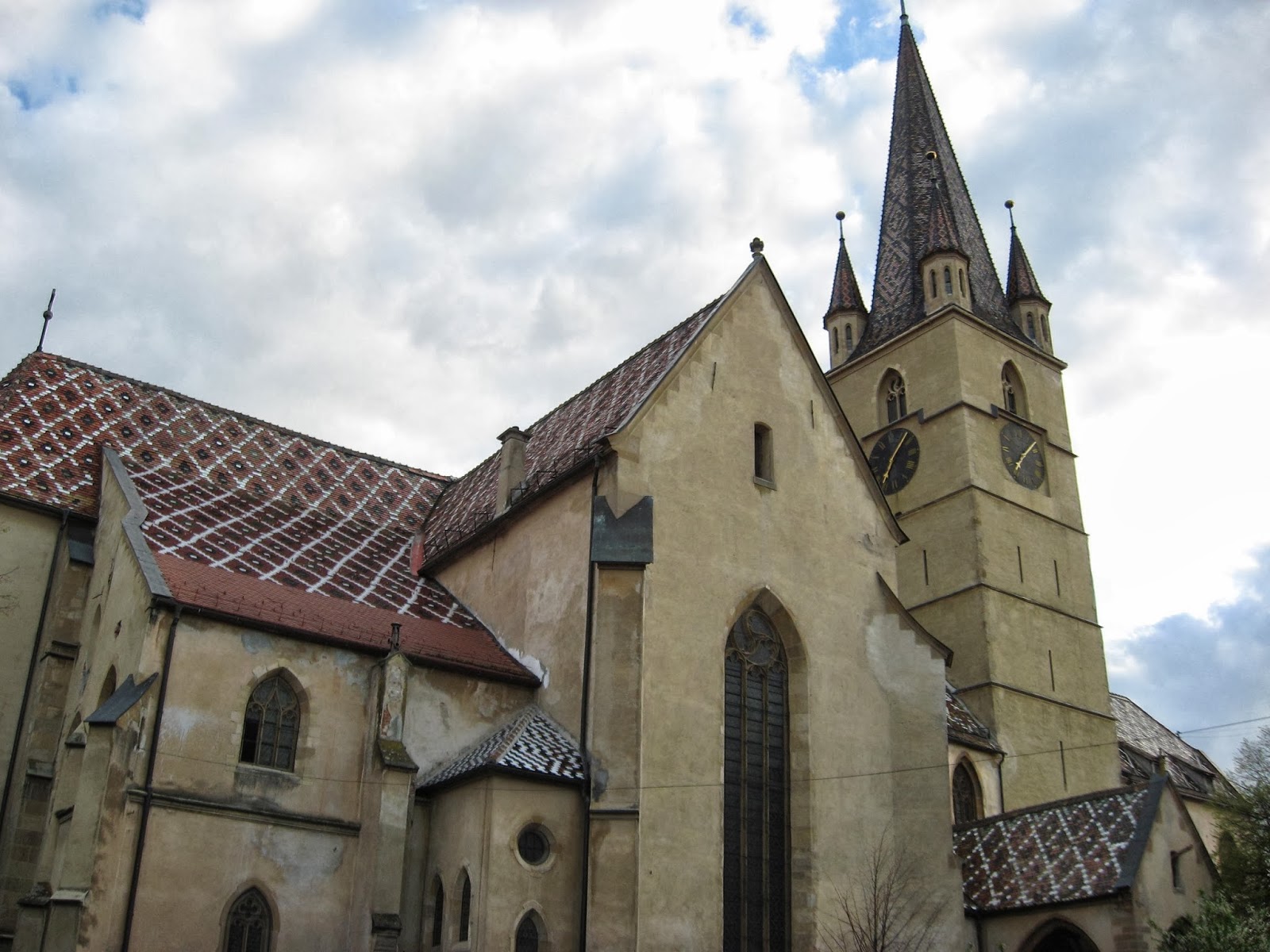
        Cel mai  important obiectiv turistic este centrul vechi al orasului – Piata Mare, locul in care se petrec toate lucrurile importante pentru locuitorii orasului, concerte, manifestatii si unde sibianul de rand se aduna sa mai palavrageasca la o bere pe una din numeroasele terase existente. In 2007 Sibiul a fost Capitala Culturala Europeana si eu am fost pentru prima data aici la festivalul Artmania de  unde am ramas cu o impresie foarte frumoasa despre oras. De asemenea tot aici se organizeaza Targul de Paste şi Targul de Craciun.


      Prin obiectivele turistice care pot fi vizitate in tot aici sunt:
Casa Calfelor – singura de acest gen din România; în luna august multe calfe îmbrăcate tradițional vin și participă la diverse meșteșuguri.;
Palatul Brukenthal (Muzeul Brukenthal) – expoziții și galerii de artă; se pot vizita și curțile interioare.
Clădirea Primăriei Municipiului Sibiu – a fost inițial bancă, primărie, CEC și apoi din 2006 din nou primărie; găzduiește și un Centru de Informare Turistică de unde puteți primi îndrumări privind vizitarea orașului.
Turnul Sfatului – face trecerea dintre Piața Mică și Piața Mare și se numește așa din cauza faptului că este lipit de clădirea fostei primării; s-a dărâmat în urma unui mare cutremur și a fost reconstruit cu ajutorul cetățenilor;
Muzeul Astra - cea mai importantă instituţie fondată de Asociaţiunea Transilvană pentru Literatura Română şi Cultura Poporului Român, avand ca scop promovarea identitatii etnico-culturală a romanilor din zona Sibiului. http://www.muzeulastra.ro/


De asemenea in oras mai puteti face o plimbare pe linga zidurile vechii cetati medievale care impreuna cu cele 3 turnuri Turnul Olarilor, Turnul Archebuzierilor si Turnul Dulgherilor reprezinta ceea ce a mai ramas din vechea cetate medievala.


Lucru pe care va sfatuiesc sa-l faceti cit mai curind avind in vedere frumusetea peisajului autumnal.
Nu pot uita totusi de Podul Minciunilor – face trecerea din Piața Mică în Piața Huett; a fost inițial un pod de lemn, iar denumirea în germană s-a deformat din Podul Întins în Podul Minciunilor; este primul pod din fier forjat din România și fără susținere.care are o istorie aparte si despre care se spune ca daca stai pe el si spui o minciuna se rupe. Acum nu stiu daca este doar o legenda, sau cei care au trecut pe el nu au avut curajul pina acum sa spuna vre-o minciuna, cert este ca podul este inca in picioare si reprezinta unul dintre punctele de atarctie ale orasului.
         În ceea ce priveste posibilitatile de cazare orasul ofera o multitudine de variante de la hostel-uri/pensiuni pina la hoteluri de 4*. Detalii puteti gasi aici  cazare sau aici http://www.turistinfo.ro/sibiu/cazare-hoteluri-vile-pensiuni-sibiu.html. 
Ultima oara cind am fost eu am stat aici: http://www.turistinfo.ro/sibiu/cazare-sibiu/pensiunea_kon_tiki-c618.html si pot spune ca am fost foarte multumit de calitatea serviciilor oferite, plus ca mincarea este foarte buna.
         Accesul este destul de usor, orasul beneficiind de un aeroport international Aeroport  sau pe sosea pe drumul european E 68 (Arad - Sibiu - Brasov) si E 81 (Cluj - Sibiu - Pitesti - Bucuresti)
Cam asta ar fi  parerea mea despre acest oras. Sper ca v-a placut in il veti lua in calcul pentru calatoriile voastre.

ENGLISH


With this post I am continuing the series about beautiful city in Romania visited by me . Today I'll take care of Sibiu .
 In this town I was so far 2 times, and of course that does not seem enough, so I plan to visit it again soon. Especially now in the fall. Documented history of the city begins in 1911 in an ecclesiastical document as the Cibinium city by Pope Celestine III who confirmed the existence of the seatlement of germans in Transylvania. In 1321 the town is mentioned as the Hermannsdorf in the second half of the century Sibiu get promoted as civitas and in a document from 1366 is mentioned for the first time under the name of Hermannstadt. The late fifteenth century forms Saxon institution called the University at the forefront of all the Saxon administrative hierarchy headed by a royal judge , later committing the Saxons .
The city is located in the southern part of Transivaniei, on the river side of  Cibin, relatively close to the geographical center of Romania, Fagaras Mountains are near by (approx. 20 km), the Cindrel Mountains (approx. 12 km) and Lotrului Mountins (approx. 15 km) that are bordering the Cibin depression in the south- west.


The most important landmark is the old center – The Big Square, the place where all the important things are happening, concerts, demonstrations and where the regular inhibitens are gathering for a beer on one of the many existing terraces . In 2007 Sibiu was the European Capital of Culture and that is when I was the first time there at the Artmania Festival's that left me a very good impression about the city. Also the Easter and Christmas Fair  are held here.


Few of the most important attraction can be found here:
-
Casa Calfelor - the only one of its kind in Romania. In August many people, dressed traditionally come and participate in various crafts. ;
- Brukental Palace ( Museum Brukental ) – where you can visit exhibitions and galleries;.
- Sibiu City Hall building - originally a bank, but since 2006 it become the town hall,  Also Tourist Information Centre can be found here where you can get advice on visiting the city.
- Turnul Sfatului – is making the way between the Small and Large Square and is called so because it is stuck to the building of the former town hall, it was destroyed by a huge earthquake and was rebuilt with the help of the Sibiu  citizens. - Astra Museum - the most important institution founded by the Transylvanian Association for Romanian Literature and Culture of the Romanian People, aimed to promoting ethno-cultural identity of Romanians in Sibiu area.


http://www.muzeulastra.ro/

Also in town you can also take a walk beside the walls of the old medieval fortress with the 3 towers Turnul Olarilor, Turnul Archebuzierilor si Turnul Dulgherilor representing what is left of the old medieval town.


I cannot overlook the Bridge of Lies - making the transition from the Small Square to the Huett Square, what was originally a wooden bridge and its German name of the bridge stretched deformed Liars Bridge. At the beginning it was the first iron bridge in Romania without support. which has a special history. Legend says that if you sit on it and tell a lie it breaks. Now I do not know if it's just a myth, or those who have passed on him until now did not had the courage to tell a lie, the fact is that the bridge is still standing and is one of the city important turistic atraction.
       Regarding the possibilities of accommodation, the city offers a variety options from hostel/pension up to 4 * hotels . Details can be found here: http://www.turistinfo.ro/sibiu/cazare-hoteluri-vile-pensiuni-sibiu.html. 
Last time I went to Sibiu  I was at  http://www.turistinfo.ro/sibiu/cazare-sibiu/pensiunea_kon_tiki-c618.html and I can say that I was very pleased with the quality of services, also the food is very good.
The access to the city is easy, the city benefited from an international airport http://www.sibiuairport.ro/localizare.html or on the road, take the  European road E 68 ( Arad - Sibiu - Brasov ) and E 81 ( Cluj - Sibiu - Pitesti - Bucharest )
This is all for now about this city . I hope you like it and will take into account to visit it some time.

                                                     FRANCAISE


Avec ce post , je continue la série commence avec les belle ville de Roumanie visité par moi. Aujourd'hui, je vais m'occuper de Sibiu.
          Dans cette ville, j'étais si loin 2 fois, et bien sûr, cela ne semble pas assez, alors j'ai l'intention de visiter à nouveau bientôt. Surtout maintenant à l'automne.
L'histoire documenté de la ville commence en 1911 dans un document ecclésiastique par le pape Célestin III conu comme la ville Cibinium, qui a confirmé l'existence de la seatlement des Allemands de Transylvanie. En 1321 , la ville est mentionnée comme la Hermannsdorf et dans la seconde moitié du siècle Sibiu il obtenir une promotion comme civitas. Aussi  dans un document de 1366 est mentionné pour la première fois sous le nom de Hermannstadt. La fin du XVe siècle constitue institution saxon appelé l'université à la pointe de toute la hiérarchie administrative saxonne dirigée par un juge royal , commettant plus tard, les Saxons.
La ville est située dans la partie de sud de Transivanie, sur le côté de la rivière Cibin, relativement proche du centre géographique de la Roumanie, les montagnes de Fagaras sont à proximité (env. 20 km), les montagnes Cindrel ( env. 12 km) et Lotrului ( env. 15 km) qui sont en bordure de la dépression Cibin dans le sud- ouest.


Le monument le plus important est le vieux centre – La grande marche l'endroit où toutes les choses importantes se produisent , concerts, démonstrations et où les inhibitens réguliers sont réunis pour une bière sur une des nombreuses terrasses existantes. En 2007, Sibiu a été la capitale européenne de la culture et c'est alors que j'étais la première fois au festival de Artmania que moi donne une très bonne impression sur la ville. Aussi la fête de Pâques et Foire de Noël sont organisées ici.


Les attraction le plus important peut être trouvé ici:
          - Casa Calfelor - le seul de son genre en Roumanie. En août, beaucoup de gens, habillés viennent traditionnellement et de participer à divers métiers;
         - Brukental Palais (Musée Brukental ) - où vous pourrez visiter les expositions et les galeries ;
- Bâtiment Mairie Sibiu - à l'origine une banque, mais depuis 2006, elle devient la mairie , également Centre d'information touristique peut être trouvé ici où vous pouvez obtenir des conseils sur la visite de la ville ;
        - Turnul Sfatului - effectue le chemin entre le Petit et Grand Place et est appelé ainsi parce qu'il est collé au bâtiment de l'ancien hôtel de ville, il a été détruit par un énorme tremblement de terre et a été reconstruite avec l'aide des citoyens de Sibiu ;   
- Le Musee Astra  - la plus importante institution fondée par l'Association pour la littérature roumaine de Transylvanie et la culture du peuple roumain, qui vise à promouvoir l'identité ethno-culturelle des Roumains dans la région de Sibiu:


http://www.muzeulastra.ro/
Toujours en ville, vous pouvez également faire une promenade près des remparts de l'ancienne forteresse médiévale avec les 3 tours Turnul Olarilor , Turnul Archebuzierilor si Turnul Dulgherilor qui représente ce qui reste de la vieille ville médiévale .


Je ne peux pas oublier le Pont des Mensonges – qui fait la transition de la petite place jus qua la place Huett, ce qui était à l'origine un pont en bois et son nom allemand du pont tendu déformé en Pont des Mensonges. Au début, il fut le premier pont de fer en Roumanie sans soutien. qui a une histoire particulière . La légende dit que si vous asseyez sur cette pout et dites une mentir, il se casse. Maintenant, je ne sais pas si c'est juste un mythe, ou ceux qui ont passé sur lui jusqu'à maintenant n'ont pas eu le courage de dire un mensonge , le fait est que le pont est toujours debout et est l'une des villes importantes atraction touristique .
En ce qui concerne les possibilités d' hébergement , la ville offre un large éventail d'options de l'auberge / pension jusqu'à hôtels 4 * . Les détails peuvent être trouvés ici  http://www.turistinfo.ro/sibiu/cazare-hoteluri-vile-pensiuni-sibiu.html

La dernière fois que je suis allé à Sibiu j'étais à :  http://www.turistinfo.ro/sibiu/cazare-sibiu/pensiunea_kon_tiki-c618.html  et je peux dire que j'ai été très satisfait de la qualité des services , aussi la nourriture est très bon .
L'accès à la ville est facile, la ville bénéficié d'une aéroport international  http://www.sibiuairport.ro/localizare.html ou vous pouvez vennir sur la route, prendre la route européenne E 68 ( Arad - Sibiu - Brasov) et E 81 ( Cluj - Sibiu - Pitesti - Bucarest).
C'est tout pour le moment sur ​​cette ville . J'espère que vous l'aimez et que vous prendrez en considération pour visiter un certain temps.